
The best handover answers what is safe and ready today, what needs attention next, and where the supporting knowledge lives.
Prepare the operating picture first
Update machinery hours, close completed tasks, verify overdue and upcoming work, count critical spares, and separate active defects from ideas for later improvement. Do this before the handover meeting so time aboard is spent confirming reality instead of cleaning up lists.
Walk the vessel by system
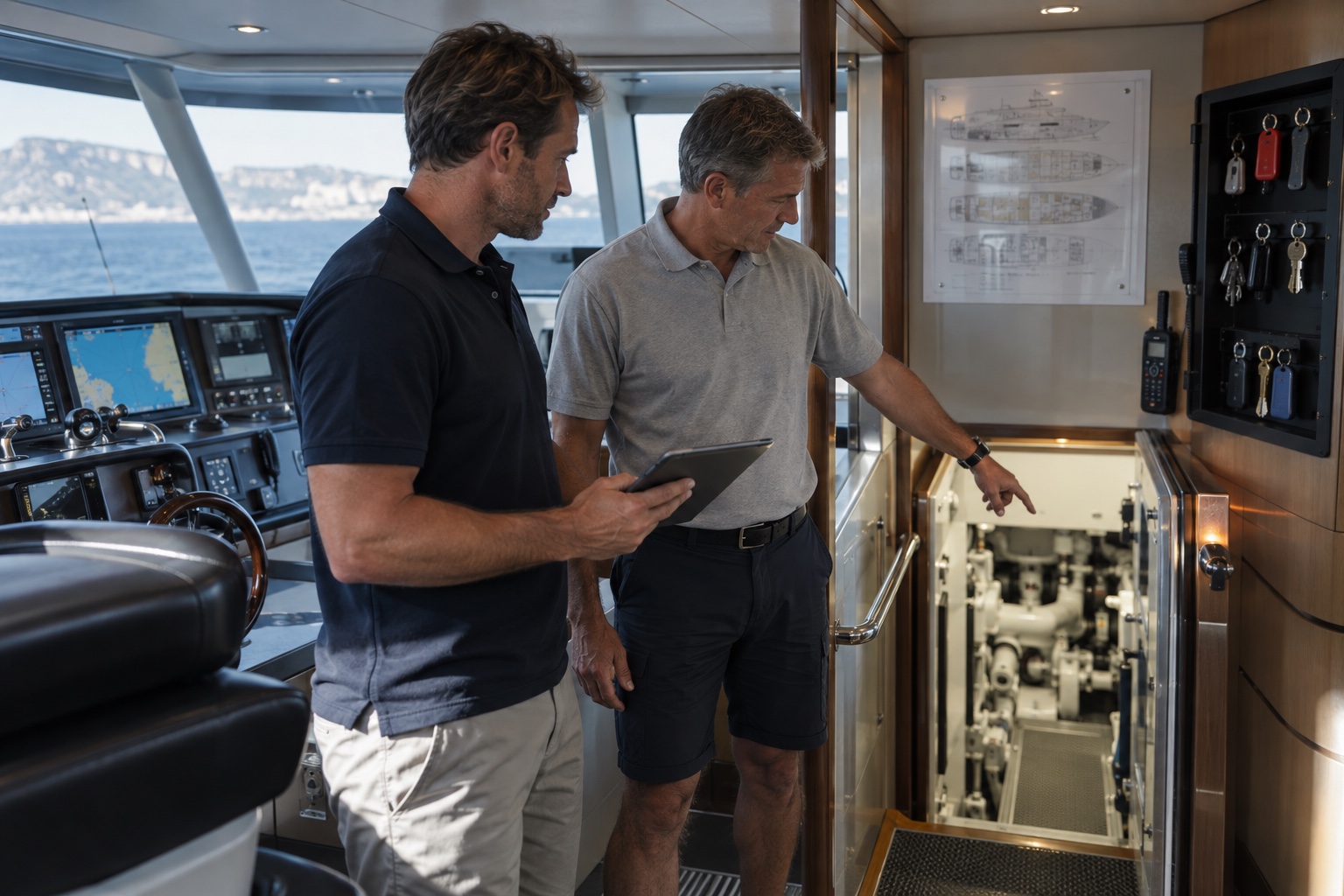
Move through propulsion, electrical power, steering, fuel, water, pumps, deck equipment, navigation, communications, and safety. Show normal operating states, unusual procedures, isolation points, alarms, access panels, and where manuals and tools are kept.
Separate open work by decision
| CATEGORY | HANDOVER QUESTION |
|---|---|
| Safety or dispatch blocker | What prevents operation or requires immediate control? |
| Scheduled maintenance | What is due next by date or machinery hours? |
| Waiting on parts | What has been ordered, from whom, and where will it arrive? |
| Monitor | What condition needs another reading or inspection? |
| Improvement | What is useful but does not affect present readiness? |
Confirm the document set
Review registration, ownership records, insurance, operating permits, safety certificates, customs or cruising documents, manuals, warranties, surveys, and recent yard records. Confirm expiry dates and keep the current copy accessible to the people who need it.
Transfer access and relationships securely
List marinas, yards, mechanics, suppliers, agents, and emergency contacts with context about what each supports. Transfer digital access through the appropriate secure method instead of placing passwords in general notes. Remove access that should not survive the personnel change.
- Update the shared record.Bring hours, tasks, inventory, and documents current.
- Walk the physical vessel.Confirm systems, locations, and procedures aboard.
- Review the next 30 days.Cover trips, service, parts, reservations, and known risks.
- Assign every open decision.No unresolved item should belong to “someone.”
- Schedule a follow-up.Capture questions that appear after the new person operates the vessel.
A living vessel record makes handover a review instead of a reconstruction.
Create a shared vessel workspace →