
The goal is not to catalog every fastener aboard. It is to prevent a known service or predictable failure from stopping because the right part cannot be found.
Begin with consequence and lead time
Prioritize parts that restore propulsion, electrical power, steering, pumping, cooling, fuel delivery, and safety systems. Then include consumables required by the maintenance plan. A filter used every 200 hours deserves visibility even when its failure is not dramatic.
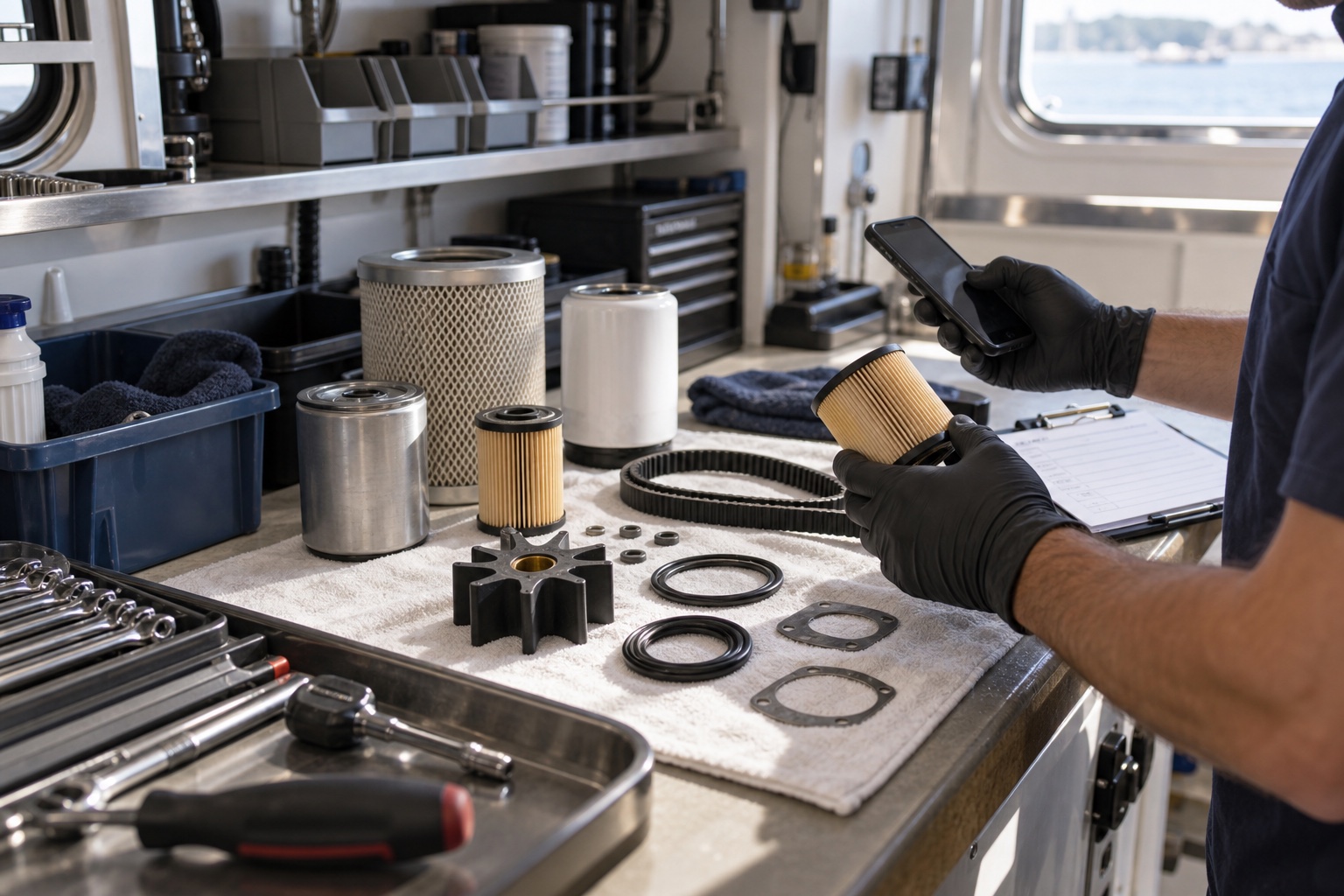
- Engine and generator oil and fuel filters
- Raw-water pump impellers and cover gaskets
- Belts, fuses, lamps, and common relays
- Fluids, absorbents, sealants, and service hardware
- Pump service kits and critical hose fittings
- Safety-equipment consumables appropriate to the vessel
Record what each part fits
A box labeled “fuel filter” can still be useless. Record the manufacturer part number, compatible equipment, and any verified alternate. Photograph the package and the identifying markings, but keep the searchable text in the inventory record.
Use locations people can follow
Name storage spaces from the vessel inward: “engine room, port aft locker, bin 3” is more useful than “spares.” Apply the same wording aboard and in the digital record. Store heavy items low, protect parts from moisture and vibration, and keep emergency items accessible without unloading an entire compartment.
Set minimums from real operating needs
Choose a minimum quantity based on consumption, failure consequence, delivery time, and the distance from support. A local day boat and an offshore cruising yacht should not carry identical inventories. Review quantities after each service and before a remote trip or busy operating period.
| SIGNAL | ACTION |
|---|---|
| At minimum | Order enough to restore the working quantity |
| Allocated to task | Protect the item from being consumed elsewhere |
| Unknown fit | Verify against the equipment record before departure |
| Expired or damaged | Remove, replace, and record the change |
Connect parts to the work they support
Link required filters, fluids, belts, seals, and kits to recurring maintenance. The operator should be able to see that service is approaching and whether the required parts are aboard. After completion, reduce quantity and create the replenishment action immediately.
Start with the generator or main engine, verify every listed part physically, then move to the next critical system.
Organize your vessel inventory →