
Preventive maintenance becomes operational when the work schedule and maintenance schedule can be reviewed together.
Build a vessel-by-vessel baseline
Start with propulsion, generators, steering, hydraulics, deck machinery, pumps, navigation, communications, and required safety equipment. Record current hours, next known service, active defects, critical spare parts, and documentation status for each vessel.
Keep identical vessels separate. Two engines of the same model can have different hours, histories, conditions, and parts aboard.
Define what ready means
A vessel may be mechanically operable and still not be ready for its next assignment. Readiness should account for safety blockers, overdue maintenance, fuel, required equipment, crew qualifications, permits, and job-specific needs.
| STATUS | OPERATIONAL MEANING |
|---|---|
| Ready | No known blocker for the assigned work |
| Ready with monitor | Condition is controlled and has an owner or next check |
| Restricted | Operation is limited by a documented condition |
| Not ready | A safety, compliance, equipment, or maintenance blocker remains |
Choose practical maintenance windows
Forecast when each hour-based task will become due using recent utilization. Group work only when it reduces access or downtime without obscuring separate completion records. Confirm parts, mechanic availability, berth or yard access, and the effect on scheduled jobs.
Assign a person and a closeout standard
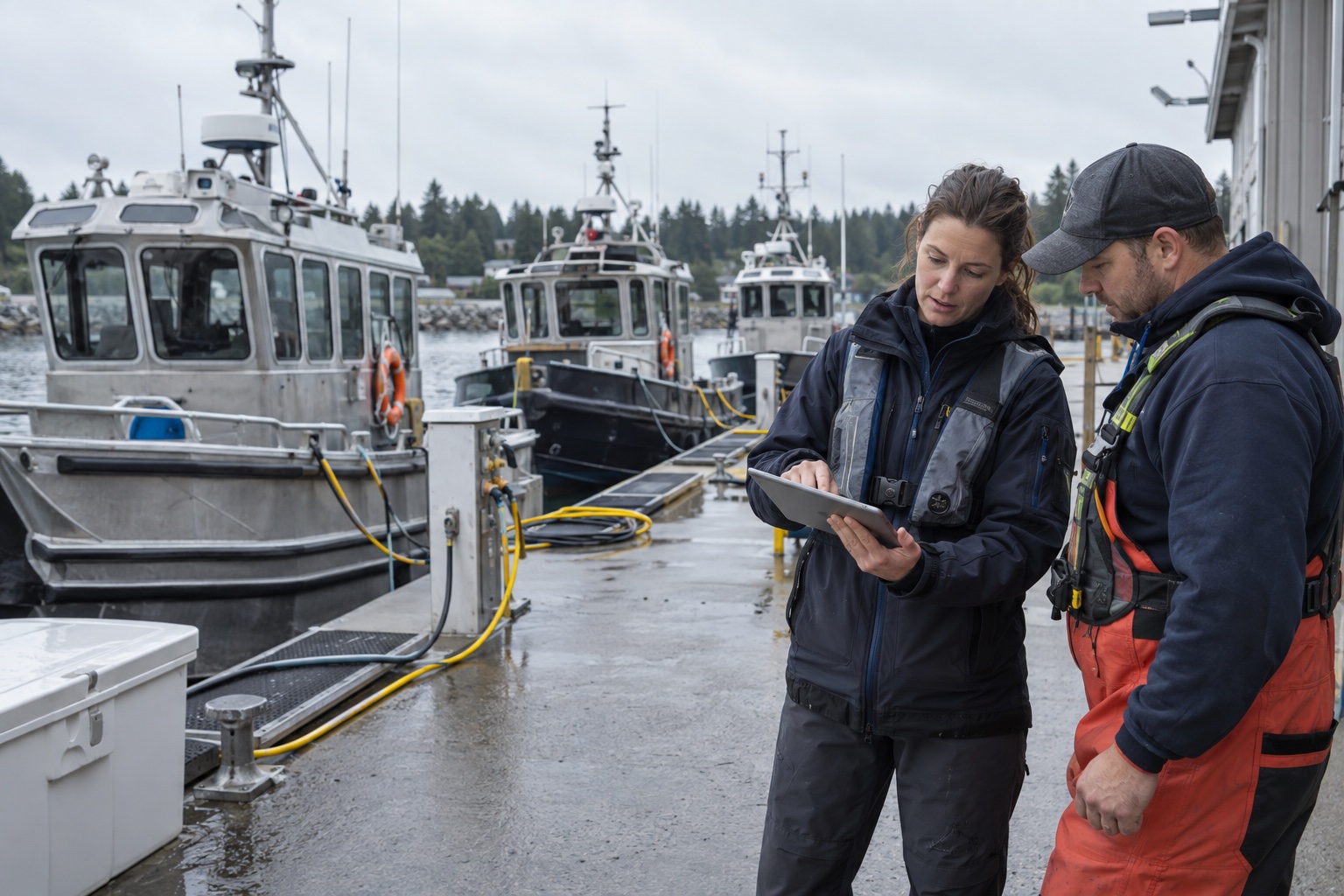
Every task needs an owner, even when an outside mechanic performs the physical work. The owner confirms access, parts, completion date, machinery reading, notes, invoices, photos, and follow-up findings. A verbal “it is handled” should not be the final fleet record.
- Plan.Confirm scope, parts, access, and operating impact.
- Perform.Capture findings that change the next decision.
- Close.Record date, hours, work, provider, and evidence.
- Advance.Calculate the next recurring service and replenish parts.
Run a short fleet review
Review overdue work, coming-up service, readiness blockers, tasks waiting on parts, stale machinery readings, and unassigned work at a regular operating cadence. Focus the meeting on decisions and ownership. The record should hold the detail.
Bring its current hours, critical equipment, next services, and open defects into one view, then repeat the structure across the fleet.
Set up your work-boat fleet →