About the name: Blue Heron Marine, Tide Runner, Beacon, and North Reach are fictional. This illustrative scenario reflects WatchDeck’s multi-vessel workflow; it is not a customer testimonial or a claim of measured fleet performance.
The fleet is small enough for everyone to talk—and busy enough for talk to fail
Blue Heron Marine operates three work boats: Tide Runner handles crew transfers, Beacon supports inspections, and North Reach carries tools and technicians. Captains report issues by phone, text, and the whiteboard in the shop.
A slow-starting generator on Beacon is mentioned at shift change. Tide Runner consumes the last spare primary filter. North Reach finishes a hydraulic-hose inspection, but the paperwork remains aboard. Every fact exists. The operations manager cannot see the fleet’s current maintenance position in one review.
Keep vessel truth separate and operational attention shared
| VESSEL | CURRENT ATTENTION |
|---|---|
| Tide Runner | Restock primary filters; next main-engine service coming up |
| Beacon | Generator starting defect assigned for diagnosis before next job |
| North Reach | Hydraulic inspection completed; photos and notes added to history |
A ten-minute review has a dependable structure
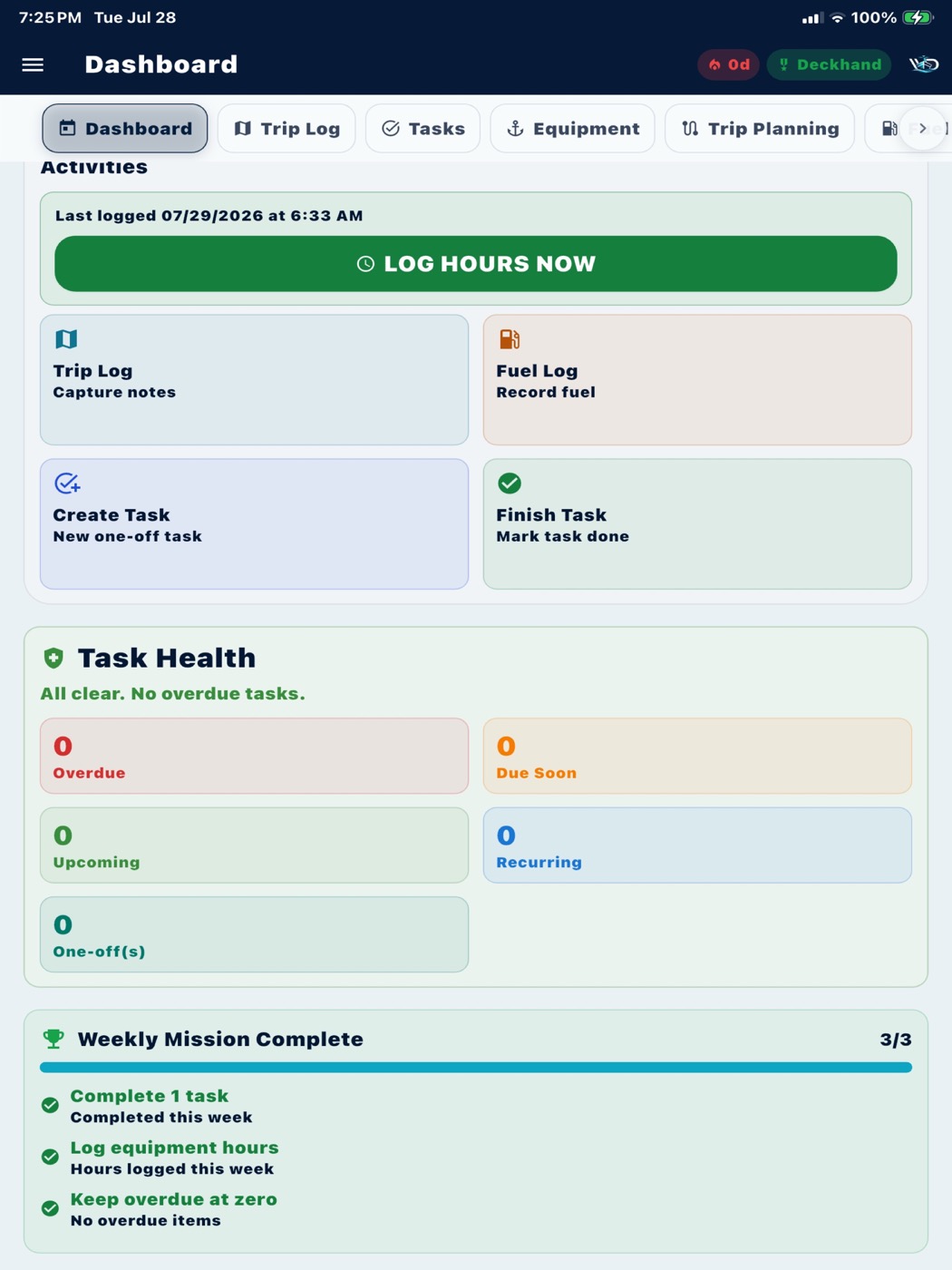
- Start with overdue and due-soon work.The manager sees maintenance demand by vessel without combining unlike equipment.
- Review new defects.Each observation becomes a task with priority, vessel, equipment, and responsible person.
- Check waiting work.Parts, approval, mechanic availability, or operating schedule remain visible as the reason work has not moved.
- Confirm yesterday’s completions.Readings, notes, and attachments become history instead of disappearing when a shift ends.
- Move stock deliberately.If a spare transfers between boats, its new quantity and location are recorded.
Blue Heron Marine does not need one giant task list. It needs a consistent way to see readiness across three distinct boats.
The generator defect keeps its owner
Beacon’s slow-start report becomes an assigned diagnostic task. The next captain sees it before departure. The mechanic records the test result, corrective work, and parts used. Closing the task leaves the decision with the generator’s history rather than at the bottom of a message thread.
WatchDeck does not judge whether a vessel should operate with a defect. The operator’s procedures and qualified personnel make that call. The platform keeps the reported condition, decision, action, and completion together.
Add vessels without multiplying uncertainty
As Blue Heron Marine adds work or another boat, the operating rhythm stays recognizable: update readings, surface due work, assign exceptions, prepare parts, record completion, and preserve history by vessel.
The benefit is continuity. A captain can focus on their boat, the mechanic can focus on assigned work, and the manager can see where attention is required without chasing every person for a separate update.
Create your first vessel workspace → or tell us how your fleet shares work today.