
The best vessel maintenance system is specific enough to guide the work and simple enough that people continue using it when the season gets busy.
A long equipment spreadsheet is not yet a maintenance system. Neither is a calendar full of reminders with no connection to the machinery. A dependable system connects the vessel’s physical assets to service triggers, work instructions, required parts, and completed history.
1. Start with the equipment that can stop the vessel
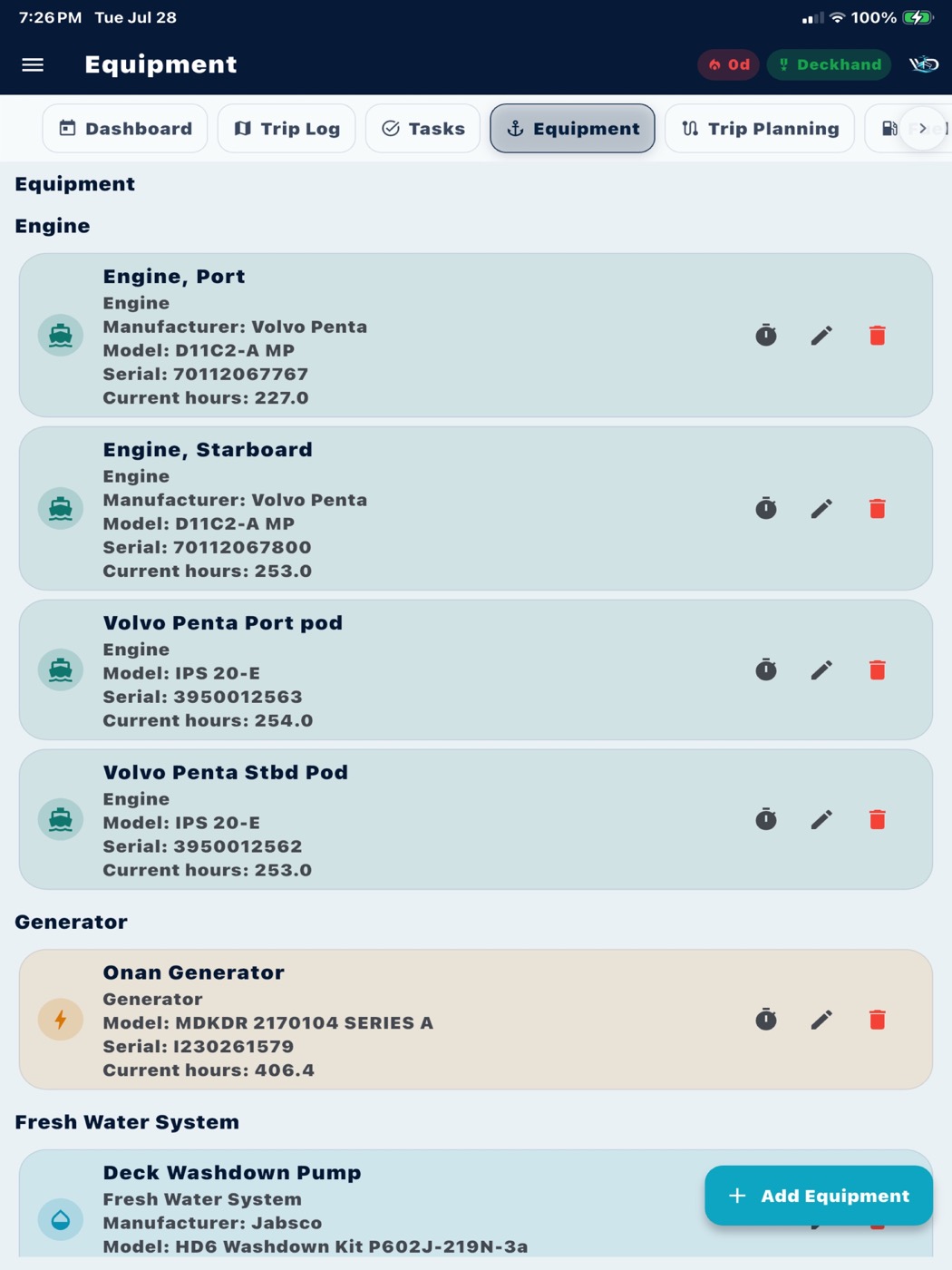
Do not begin by documenting every fitting aboard. Start with equipment whose failure affects propulsion, electrical power, steering, water, safety, or the vessel’s ability to work.
A practical first equipment list
- Main engines and transmissions
- Generators and battery systems
- Steering, hydraulics, and deck machinery
- Bilge pumps, raw-water systems, and seacocks
- Navigation, communications, and safety equipment
- Tenders, outboards, watermakers, and climate systems
For each item, record the name people actually use aboard, equipment category, manufacturer, model, serial number, current machinery hours when applicable, and the location of the manual.
2. Decide what triggers each service
Most recurring maintenance belongs to one of two trigger types.
Calendar-based maintenance
Use a date interval when time, season, inspection requirements, or environmental exposure drives the work. Examples include annual fire-extinguisher review, seasonal commissioning, life-raft inspection, and monthly battery checks.
Machinery-hour maintenance
Use an hour interval when actual use drives wear or manufacturer guidance. Examples include engine oil, generator filters, transmission service, and hydraulic inspections.
If hours appear in several logs, decide which equipment record holds the current accepted reading. Maintenance completion should use that value by default while allowing a correction from the physical gauge.
3. Write tasks for the person doing the work
A task title should identify the action and equipment: “Change generator oil and filter” is clearer than “Generator service.” The task should then carry only the detail needed to perform and close the work correctly.
- The linked equipment
- Calendar or machinery-hour interval
- Priority and expected timing
- Concise instructions or a manual reference
- Parts and consumables required
- Any completion evidence the operation needs
Avoid writing one enormous annual-service task. Smaller tasks can have different triggers, parts, owners, and completion histories.
4. Connect critical parts before the task becomes due
A maintenance plan can identify due work and still fail operationally if the filter, belt, impeller, fluid, or seal is not aboard. Record the parts that block common or high-consequence work, along with quantity and storage location.
For a recreational yacht, this reduces last-minute trips during a short cruising window. For a work boat, it lets the crew distinguish a ready task from one waiting on procurement.
5. Treat completion as a new record
When work is done, record the event rather than simply removing the reminder. At minimum, keep the completion date and the applicable machinery reading. Add the person, notes, photos, and invoice when they help the next person understand the job.
- Confirm the completion date.This places the work accurately in vessel history.
- Confirm the equipment reading.Use the current known hours unless the physical meter provides a correction.
- Update the asset when appropriate.The equipment record and completed work should agree.
- Calculate the next recurrence.Move the active schedule forward from the completed date or reading.
- Preserve supporting context.Keep notes and files with the completed service.
For a worked example, read the 200-hour generator service case study.
6. Review the system at operating milestones
A maintenance system needs occasional review because the vessel changes. Use commissioning, haul-out, yard periods, crew changes, and major trips as natural checkpoints.
| REVIEW | QUESTION TO ASK |
|---|---|
| Equipment | Has anything been installed, replaced, or removed? |
| Readings | Are current hours aligned with the physical meters? |
| Tasks | Do intervals still match manufacturer guidance and experience? |
| Inventory | Are the critical quantities and locations accurate? |
| History | Can another person understand the last completed service? |
Start with critical equipment and its next known service. A focused system that the crew uses is more valuable than exhaustive data that never becomes operational.
Create your vessel workspace →